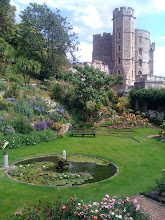
Do you want to travel to Great Britain? If so, shoot me an email - I'm trying to poll interest for a trip that would take place either this summer or next summer, so let me know if you're interested. If at least 12 students are interested, I'll call a representative and get some price quotes. The trip would hopefully last 10 to 14 days and would cover England, Scotland, and Ireland. Let me know!
Tuesday, November 18, 2008
Any Interest in Jumping the Pond? Class Trip to Great Britain!
Hey Kids!
Do you want to travel to Great Britain? If so, shoot me an email - I'm trying to poll interest for a trip that would take place either this summer or next summer, so let me know if you're interested. If at least 12 students are interested, I'll call a representative and get some price quotes. The trip would hopefully last 10 to 14 days and would cover England, Scotland, and Ireland. Let me know!


Do you want to travel to Great Britain? If so, shoot me an email - I'm trying to poll interest for a trip that would take place either this summer or next summer, so let me know if you're interested. If at least 12 students are interested, I'll call a representative and get some price quotes. The trip would hopefully last 10 to 14 days and would cover England, Scotland, and Ireland. Let me know!
Glamis Castle
Hey kids -
Here's a picture of Glamis Castle. As you know, Macbeth was Thane of Glamis however in the play, his castle is not Glamis Castle but instead is referred to as the castle at Dunsinane. Since there is no longer a castle at Dunsinane, I thought this picture would suffice for you to get an idea of the play's setting.
Remember - in the play, he just became the Thane of Cawdor, therefore he wouldn't live in Cawdor Castle... although there is one!
Also, although Inverness is referenced throughout the play, his castle would not have been the castle at Inverness. Inverness also refers to the area surrounding the city itself.
Here's a picture of Glamis Castle. As you know, Macbeth was Thane of Glamis however in the play, his castle is not Glamis Castle but instead is referred to as the castle at Dunsinane. Since there is no longer a castle at Dunsinane, I thought this picture would suffice for you to get an idea of the play's setting.
Remember - in the play, he just became the Thane of Cawdor, therefore he wouldn't live in Cawdor Castle... although there is one!
Also, although Inverness is referenced throughout the play, his castle would not have been the castle at Inverness. Inverness also refers to the area surrounding the city itself.
Wednesday, November 12, 2008
Technical Difficulties
If you need the Macbeth assignment, please email me tonight. For some reason I can't copy and paste it to the blog.
Wednesday, November 5, 2008
Don't Make The Same Mistake Michael Made!
Hey kids,
I'm grading your Wife of Bath essays and I'm noticing that many of you are making the same error - instead of explaining HOW the story reveals who is in control, you are just making a simple statement and then retelling the story.
One of the problems, in my opinion, of studying classic literature in a contemporary classroom is that because the teacher knows the story inside and out, he or she can't help but reveal that knowledge during class discussion. Therefore, instead of teacher and students unlocking new meaning together, teachers pass on canned meaning to students for future regurgitation.
I don't want that to be the basis of our classroom discovery - instead, I want you to determine your own meaning and to then tell me how you came upon that meaning through your reading.
Take a look at this article from The Onion - pay attention to Lucy Swain's comment toward the end and in this class, try NOT to do what she thinks teachers want you to do!
http://www.theonion.com/content/node/30988
I'm grading your Wife of Bath essays and I'm noticing that many of you are making the same error - instead of explaining HOW the story reveals who is in control, you are just making a simple statement and then retelling the story.
One of the problems, in my opinion, of studying classic literature in a contemporary classroom is that because the teacher knows the story inside and out, he or she can't help but reveal that knowledge during class discussion. Therefore, instead of teacher and students unlocking new meaning together, teachers pass on canned meaning to students for future regurgitation.
I don't want that to be the basis of our classroom discovery - instead, I want you to determine your own meaning and to then tell me how you came upon that meaning through your reading.
Take a look at this article from The Onion - pay attention to Lucy Swain's comment toward the end and in this class, try NOT to do what she thinks teachers want you to do!
http://www.theonion.com/content/node/30988
Tuesday, November 4, 2008
Macbeth! Macbeth! Macbeth!
Hey kids -
I hope you're enjoying your break from school; for those of you who are 18, don't forget to vote today!
Don't forget to read Act I of Macbeth. Every human fault, foible, value, and virtue can be found within this play's five acts - it's all of humanity rolled into one play!
If you haven't started reading Macbeth yet or if you have started but are having difficulties, take a moment to refresh your mind and remember the reading skills we have been practicing this year:
1. Choose a moderate amount of material to begin with - perhaps the first few scenes. Keep in mind the structure is written employing enjambment: http://en.wikipedia.org/wiki/Enjambement. Also, remember language choice is of utmost importance in a play, so consider how the play's language reveals its meaning.
2. Get a grasp of how the material is organized:
Scan the section for stage directions, headings, sub-headings, and topic sentences to get its general idea; pay attention to people's names, titles, ranks, relationship to one another, elements of setting, etc.
3. Make use of annotations: read first for what you do understand, and to determine the difficulty of the rest. Use the annotations to clarify meaning immediately. Some of you are still resistant to this - don't be! The annotations will help unlock meaning and deepen your understanding of the moment.
4. Mark what you do not understand to review later. Remember to invert the syntax of the structure to make sense of antiquated sentences - find the subject, then find its verb!
5. Look up words whose meanings are important to your understanding of the material, but you cannot discern from the context.
6. As you read, practice the "look-away method:" Periodically look away from the text and ask yourself a stimulus question relating to the text. Write these questions down on your packet as annotations and record your answers, thoughts, discoveries next to them.
7. Make connections and associations, but don't use this exercise to memorize--but rather understand. Remember: making connections to your personal life is a good pre-reading activity that will help to unlock meaning later. It is not the goal, however, of academic reading, so be prepared to go beyond making connections!
8. Read to the end. Do not get discouraged and stop reading.
Ideas can become clearer the more you read. When you finish reading, review to see what you have learned, and reread those ideas that are not clear.
9. Continue to interact with the play by taking notes on it. Later, you can organize your notes by connecting ideas into an outline or concept map. Pay attention to relationships between ideas.
10. At this point, if you do not understand your reading, do not panic! Set it aside, and read it again the next day. Remember, once you've genuinely gone through this process, it's not cheating to check out "Macbeth Made Easy" or "No Fear Shakespeare". Just remember the importance and value of attempting the original play first!
11. If necessary, repeat the above process. This allows your brain to process the material, even while you sleep. This is referred to as distributed reading.
12. Try reading aloud - it forces you to consider language more carefully than reading silently to yourself because it is active and forceful.
13. One last option - the online textbook may have audio of particular scenes. Reading along while listening to a recording may not have worked for you in the classroom in the past, however I find listening to a play or novel expands my understanding and has made me a MUCH better reader, so feel free to check out the online site!
Good luck kids - I hope you enjoy Macbeth. Of course there will be sections that won't keep your interest, but for the most part it is a riveting play and one that if studied carefully, can be used as an allusion for the rest of your life.
I hope you're enjoying your break from school; for those of you who are 18, don't forget to vote today!
Don't forget to read Act I of Macbeth. Every human fault, foible, value, and virtue can be found within this play's five acts - it's all of humanity rolled into one play!
If you haven't started reading Macbeth yet or if you have started but are having difficulties, take a moment to refresh your mind and remember the reading skills we have been practicing this year:
1. Choose a moderate amount of material to begin with - perhaps the first few scenes. Keep in mind the structure is written employing enjambment: http://en.wikipedia.org/wiki/Enjambement. Also, remember language choice is of utmost importance in a play, so consider how the play's language reveals its meaning.
2. Get a grasp of how the material is organized:
Scan the section for stage directions, headings, sub-headings, and topic sentences to get its general idea; pay attention to people's names, titles, ranks, relationship to one another, elements of setting, etc.
3. Make use of annotations: read first for what you do understand, and to determine the difficulty of the rest. Use the annotations to clarify meaning immediately. Some of you are still resistant to this - don't be! The annotations will help unlock meaning and deepen your understanding of the moment.
4. Mark what you do not understand to review later. Remember to invert the syntax of the structure to make sense of antiquated sentences - find the subject, then find its verb!
5. Look up words whose meanings are important to your understanding of the material, but you cannot discern from the context.
6. As you read, practice the "look-away method:" Periodically look away from the text and ask yourself a stimulus question relating to the text. Write these questions down on your packet as annotations and record your answers, thoughts, discoveries next to them.
7. Make connections and associations, but don't use this exercise to memorize--but rather understand. Remember: making connections to your personal life is a good pre-reading activity that will help to unlock meaning later. It is not the goal, however, of academic reading, so be prepared to go beyond making connections!
8. Read to the end. Do not get discouraged and stop reading.
Ideas can become clearer the more you read. When you finish reading, review to see what you have learned, and reread those ideas that are not clear.
9. Continue to interact with the play by taking notes on it. Later, you can organize your notes by connecting ideas into an outline or concept map. Pay attention to relationships between ideas.
10. At this point, if you do not understand your reading, do not panic! Set it aside, and read it again the next day. Remember, once you've genuinely gone through this process, it's not cheating to check out "Macbeth Made Easy" or "No Fear Shakespeare". Just remember the importance and value of attempting the original play first!
11. If necessary, repeat the above process. This allows your brain to process the material, even while you sleep. This is referred to as distributed reading.
12. Try reading aloud - it forces you to consider language more carefully than reading silently to yourself because it is active and forceful.
13. One last option - the online textbook may have audio of particular scenes. Reading along while listening to a recording may not have worked for you in the classroom in the past, however I find listening to a play or novel expands my understanding and has made me a MUCH better reader, so feel free to check out the online site!
Good luck kids - I hope you enjoy Macbeth. Of course there will be sections that won't keep your interest, but for the most part it is a riveting play and one that if studied carefully, can be used as an allusion for the rest of your life.
Wednesday, October 29, 2008
Ballad Assignment
Your original ballad is due on Friday:
1. Choose a news article from an online news source.
2. Read the article and underline 5 important facts.
3. Write a stanza for each fact. Each stanza must be 4 lines long and follow a ABCB rhyme pattern - the 2nd and 4th lines rhyme.
4. Each stanza must include a refrain - you can make the last line of each stanza repeat as your refrain.
5. Make sure your ballad tells the story of your article.
1. Choose a news article from an online news source.
2. Read the article and underline 5 important facts.
3. Write a stanza for each fact. Each stanza must be 4 lines long and follow a ABCB rhyme pattern - the 2nd and 4th lines rhyme.
4. Each stanza must include a refrain - you can make the last line of each stanza repeat as your refrain.
5. Make sure your ballad tells the story of your article.
Tuesday, October 28, 2008
Homework Due Wednesday, October 29th
Homework Assignment Due Tomorrow for All British Literature Classes:
What are the similarities between "Lord Randall" and "A Hard Rain's A-Gonna Fall"?
1. Make a list of the elements of a ballad found in each and give an example from each ballad.
2. Write a sentence or two in which you determine the speakers in the Dylan ballad - infer your answer from context clues; be specific.
3. Write a paragraph in which you choose two lines from the Dylan ballad that best reveal the ballad's overall message and explain their significance to the ballad as a whole.
A Hard Rain's A-Gonna Fall – Bob Dylan
Oh, where have you been, my blue-eyed son?
Oh, where have you been, my darling young one?
I've stumbled on the side of twelve misty mountains,
I've walked and I've crawled on six crooked highways,
I've stepped in the middle of seven sad forests,
I've been out in front of a dozen dead oceans,
I've been ten thousand miles in the mouth of a graveyard,
And it's a hard, and it's a hard, it's a hard, and it's a hard,
And it's a hard rain's a-gonna fall.
Oh, what did you see, my blue-eyed son?
Oh, what did you see, my darling young one?
I saw a newborn baby with wild wolves all around it
I saw a highway of diamonds with nobody on it,
I saw a black branch with blood that kept drippin',
I saw a room full of men with their hammers a-bleedin',
I saw a white ladder all covered with water,
I saw ten thousand talkers whose tongues were all broken,
I saw guns and sharp swords in the hands of young children,
And it's a hard, and it's a hard, it's a hard, it's a hard,
And it's a hard rain's a-gonna fall.
And what did you hear, my blue-eyed son?
And what did you hear, my darling young one?
I heard the sound of a thunder, it roared out a warnin',
Heard the roar of a wave that could drown the whole world,
Heard one hundred drummers whose hands were a-blazin',
Heard ten thousand whisperin' and nobody listenin',
Heard one person starve, I heard many people laughin',
Heard the song of a poet who died in the gutter,
Heard the sound of a clown who cried in the alley,
And it's a hard, and it's a hard, it's a hard, it's a hard,
And it's a hard rain's a-gonna fall.
Oh, who did you meet, my blue-eyed son?
Who did you meet, my darling young one?
I met a young child beside a dead pony,
I met a white man who walked a black dog,
I met a young woman whose body was burning,
I met a young girl, she gave me a rainbow,
I met one man who was wounded in love,
I met another man who was wounded with hatred,
And it's a hard, it's a hard, it's a hard, it's a hard,
It's a hard rain's a-gonna fall.
Oh, what'll you do now, my blue-eyed son?
Oh, what'll you do now, my darling young one?
I'm a-goin' back out 'fore the rain starts a-fallin',
I'll walk to the depths of the deepest black forest,
Where the people are many and their hands are all empty,
Where the pellets of poison are flooding their waters,
Where the home in the valley meets the damp dirty prison,
Where the executioner's face is always well hidden,
Where hunger is ugly, where souls are forgotten,
Where black is the color, where none is the number,
And I'll tell it and think it and speak it and breathe it,
And reflect it from the mountain so all souls can see it,
Then I'll stand on the ocean until I start sinkin',
But I'll know my song well before I start singin',
And it's a hard, it's a hard, it's a hard, it's a hard,
It's a hard rain's a-gonna fall.
Copyright ©1963; renewed 1991 Special Rider Music
What are the similarities between "Lord Randall" and "A Hard Rain's A-Gonna Fall"?
1. Make a list of the elements of a ballad found in each and give an example from each ballad.
2. Write a sentence or two in which you determine the speakers in the Dylan ballad - infer your answer from context clues; be specific.
3. Write a paragraph in which you choose two lines from the Dylan ballad that best reveal the ballad's overall message and explain their significance to the ballad as a whole.
A Hard Rain's A-Gonna Fall – Bob Dylan
Oh, where have you been, my blue-eyed son?
Oh, where have you been, my darling young one?
I've stumbled on the side of twelve misty mountains,
I've walked and I've crawled on six crooked highways,
I've stepped in the middle of seven sad forests,
I've been out in front of a dozen dead oceans,
I've been ten thousand miles in the mouth of a graveyard,
And it's a hard, and it's a hard, it's a hard, and it's a hard,
And it's a hard rain's a-gonna fall.
Oh, what did you see, my blue-eyed son?
Oh, what did you see, my darling young one?
I saw a newborn baby with wild wolves all around it
I saw a highway of diamonds with nobody on it,
I saw a black branch with blood that kept drippin',
I saw a room full of men with their hammers a-bleedin',
I saw a white ladder all covered with water,
I saw ten thousand talkers whose tongues were all broken,
I saw guns and sharp swords in the hands of young children,
And it's a hard, and it's a hard, it's a hard, it's a hard,
And it's a hard rain's a-gonna fall.
And what did you hear, my blue-eyed son?
And what did you hear, my darling young one?
I heard the sound of a thunder, it roared out a warnin',
Heard the roar of a wave that could drown the whole world,
Heard one hundred drummers whose hands were a-blazin',
Heard ten thousand whisperin' and nobody listenin',
Heard one person starve, I heard many people laughin',
Heard the song of a poet who died in the gutter,
Heard the sound of a clown who cried in the alley,
And it's a hard, and it's a hard, it's a hard, it's a hard,
And it's a hard rain's a-gonna fall.
Oh, who did you meet, my blue-eyed son?
Who did you meet, my darling young one?
I met a young child beside a dead pony,
I met a white man who walked a black dog,
I met a young woman whose body was burning,
I met a young girl, she gave me a rainbow,
I met one man who was wounded in love,
I met another man who was wounded with hatred,
And it's a hard, it's a hard, it's a hard, it's a hard,
It's a hard rain's a-gonna fall.
Oh, what'll you do now, my blue-eyed son?
Oh, what'll you do now, my darling young one?
I'm a-goin' back out 'fore the rain starts a-fallin',
I'll walk to the depths of the deepest black forest,
Where the people are many and their hands are all empty,
Where the pellets of poison are flooding their waters,
Where the home in the valley meets the damp dirty prison,
Where the executioner's face is always well hidden,
Where hunger is ugly, where souls are forgotten,
Where black is the color, where none is the number,
And I'll tell it and think it and speak it and breathe it,
And reflect it from the mountain so all souls can see it,
Then I'll stand on the ocean until I start sinkin',
But I'll know my song well before I start singin',
And it's a hard, it's a hard, it's a hard, it's a hard,
It's a hard rain's a-gonna fall.
Copyright ©1963; renewed 1991 Special Rider Music
Subscribe to:
Posts (Atom)