Monday, November 24, 2008


Reader's/Writer's Workshop Submission One Assignment - Rough Draft due
Original Essay taken from : http://www.mcsweeneys.net/2006/7/11moe.html
Reader's/Writer's Workshop Submission #1
Instructions in BOLD print
Original Essay in Italics
Step #1: Choose one of your favorite songs and take a moment to examine the lyrics. Consider what the speaker is saying, on a literal level. Identify any silly lines that do not make logical sense.
Step #2: Pretending that you are the songwriter's editor, you're going to craft a short letter to the songwriter questioning his use of language. Take a moment and read the following introduction by John Moe:
NOTES ON "SWEET CHILD O' MINE,"
AS DELIVERED TO AXL ROSE BY HIS EDITOR.
Hi, Axl,
`Just got your manuscript and demo for the song "Sweet Child O' (sic) Mine." I think we need to talk. As your editor, I am responsible for making your songs as cogent as possible, for helping them reach the high editorial standards your public has come to expect. With this one, I am certainly earning my keep. After several attempts to reach you by phone, I am sending along my notes. Please make appropriate fixes as soon as possible, at which point I can send them to copyediting and proofreading in time for your upcoming studio session.
Step #3: Begin to draft a writing that models Moe's essay. Begin with a similar introduction and continue to frame your essay by quoting lines and responding to them, modeling Moe's essay that follows. Use questions and logical, direct statements to address use of illogical statements.
She's got a smile that, it seems to me—Why equivocate? You weaken your point by framing this as a mere personal observation instead of a fact.
Reminds me of childhood memories—Redundant. You either have a memory or you're reminded of something. You're not reminded of a memory. Heavy-metal fans won't stand for such writing, my friend.
Where everything was as fresh as a bright blue sky—I asked around the office and no one is sure a blue sky is "fresh." You could have a blue sky at the end of a long, sweaty day and there would be nothing fresh about it. And she reminds you of a time when things were fresh? Fond reminiscences of freshness are no foundation for love. Fix.
Now and then when I see her face it takes me away to that special place—Again, you're weakening your own argument. Why does the sight of her face transport you only periodically? And is it just her smile or her entire face that does this to you? Because you've already said both. Consistency, Axl!
And if I stared too long, I'd probably break down and cry—Why would you do that? Because you miss the freshness you described earlier? I think the whole "fresh" thing is really tripping you up. Also, crying? Wimpy.
OK, on to the second verse.
She's got eyes of the bluest skies—See, this is just getting worse. Now her eyes are made of sky? Nice imagery, but you just got done saying her smile reminded you of memories of sky. Is this verse actually supposed to be a second draft of the first verse? Am I just confused on formatting? Help!
As if they thought of rain—Axl, eyes can't think of rain. And even if they could, which they can't, why would bluest skies think of rain? Perhaps less imagery of thinking eyes made of sky and more direct exploration of your feelings?
I hate to look into those eyes and see an ounce of pain—Well, hell. I guess in your special Axl World anything is possible. Eyes can be made of sky, ponder the weather, and exhibit pain in amounts that can be weighed.
Step #4:
Take a moment and continue reading Moe's essay. Incorporate one or two word commands as independent sentences such as "Delete. Fix. Do something." This is harder to do than it seems – make sure that you are choosing strong, active words.
Her hair reminds me of a warm safe place where as a child I'd hide—Delete. Fix. Do something. You'd hide in a place that reminded you of hair? Never show me such phrases again.
And pray for the thunder and the rain to quietly pass me by—Whew. OK, listen to me now: Thunder can't quietly do anything. It's thunder. And, more importantly, do you really want to come across as a wuss who's constantly on the verge of weeping and skittering into hair caves to escape from rain? Is this a song about love or climatic anxiety? You need to work these things out.
Step #5: Read the conclusion of the essay and then choose a persuasive technique to employ as your final appeal – you can use either a logical, emotional, or ethical appeal – and then, wrap it up!
Finally, Axl, I think we might have had a misunderstanding regarding my previous notes. When I wrote in colored pencil "Where do we go now?" I wasn't offering that as a lyric. I was simply observing that, in narrative terms, the song needed to progress in some way. You love the girl, she's helping you work through some issues, whatever. So where do we go now? But instead of providing a satisfactory conclusion, you simply took my note and repeated it over and over again before ultimately just stating the title of the song. This is unacceptable. Don't ask us, the listeners, where we go. That's up to you as the writer! Tell us where we go now!
Again, let's try to fix these things soon and get "Sweet Child of Mine" ("My Sweet Child"?) into your fans' hands as quickly as possible. Because, frankly, if it should ever hit the street in its current form, the song would be a colossal failure.
Talk soon!
Your Editor
Tuesday, November 18, 2008
Any Interest in Jumping the Pond? Class Trip to Great Britain!
Hey Kids!
Do you want to travel to Great Britain? If so, shoot me an email - I'm trying to poll interest for a trip that would take place either this summer or next summer, so let me know if you're interested. If at least 12 students are interested, I'll call a representative and get some price quotes. The trip would hopefully last 10 to 14 days and would cover England, Scotland, and Ireland. Let me know!


Do you want to travel to Great Britain? If so, shoot me an email - I'm trying to poll interest for a trip that would take place either this summer or next summer, so let me know if you're interested. If at least 12 students are interested, I'll call a representative and get some price quotes. The trip would hopefully last 10 to 14 days and would cover England, Scotland, and Ireland. Let me know!

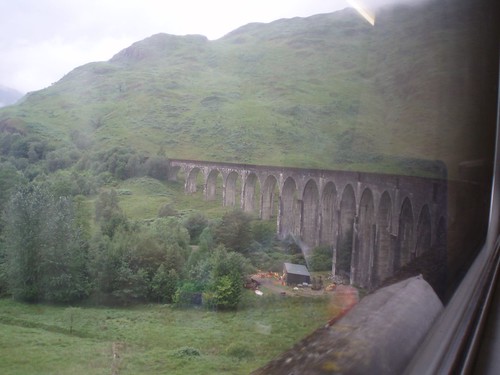

Glamis Castle
Hey kids -
Here's a picture of Glamis Castle. As you know, Macbeth was Thane of Glamis however in the play, his castle is not Glamis Castle but instead is referred to as the castle at Dunsinane. Since there is no longer a castle at Dunsinane, I thought this picture would suffice for you to get an idea of the play's setting.
Remember - in the play, he just became the Thane of Cawdor, therefore he wouldn't live in Cawdor Castle... although there is one!
Also, although Inverness is referenced throughout the play, his castle would not have been the castle at Inverness. Inverness also refers to the area surrounding the city itself.
Wednesday, November 12, 2008
Technical Difficulties
If you need the Macbeth assignment, please email me tonight. For some reason I can't copy and paste it to the blog.
Wednesday, November 5, 2008
Don't Make The Same Mistake Michael Made!
Hey kids,
I'm grading your Wife of Bath essays and I'm noticing that many of you are making the same error - instead of explaining HOW the story reveals who is in control, you are just making a simple statement and then retelling the story.
One of the problems, in my opinion, of studying classic literature in a contemporary classroom is that because the teacher knows the story inside and out, he or she can't help but reveal that knowledge during class discussion. Therefore, instead of teacher and students unlocking new meaning together, teachers pass on canned meaning to students for future regurgitation.
I don't want that to be the basis of our classroom discovery - instead, I want you to determine your own meaning and to then tell me how you came upon that meaning through your reading.
Take a look at this article from The Onion - pay attention to Lucy Swain's comment toward the end and in this class, try NOT to do what she thinks teachers want you to do!
http://www.theonion.com/content/node/30988
Tuesday, November 4, 2008
Macbeth! Macbeth! Macbeth!
Hey kids -
I hope you're enjoying your break from school; for those of you who are 18, don't forget to vote today!
Don't forget to read Act I of Macbeth. Every human fault, foible, value, and virtue can be found within this play's five acts - it's all of humanity rolled into one play!
If you haven't started reading Macbeth yet or if you have started but are having difficulties, take a moment to refresh your mind and remember the reading skills we have been practicing this year:
1. Choose a moderate amount of material to begin with - perhaps the first few scenes. Keep in mind the structure is written employing enjambment: http://en.wikipedia.org/wiki/Enjambement. Also, remember language choice is of utmost importance in a play, so consider how the play's language reveals its meaning.
2. Get a grasp of how the material is organized:
Scan the section for stage directions, headings, sub-headings, and topic sentences to get its general idea; pay attention to people's names, titles, ranks, relationship to one another, elements of setting, etc.
3. Make use of annotations: read first for what you do understand, and to determine the difficulty of the rest. Use the annotations to clarify meaning immediately. Some of you are still resistant to this - don't be! The annotations will help unlock meaning and deepen your understanding of the moment.
4. Mark what you do not understand to review later. Remember to invert the syntax of the structure to make sense of antiquated sentences - find the subject, then find its verb!
5. Look up words whose meanings are important to your understanding of the material, but you cannot discern from the context.
6. As you read, practice the "look-away method:" Periodically look away from the text and ask yourself a stimulus question relating to the text. Write these questions down on your packet as annotations and record your answers, thoughts, discoveries next to them.
7. Make connections and associations, but don't use this exercise to memorize--but rather understand. Remember: making connections to your personal life is a good pre-reading activity that will help to unlock meaning later. It is not the goal, however, of academic reading, so be prepared to go beyond making connections!
8. Read to the end. Do not get discouraged and stop reading.
Ideas can become clearer the more you read. When you finish reading, review to see what you have learned, and reread those ideas that are not clear.
9. Continue to interact with the play by taking notes on it. Later, you can organize your notes by connecting ideas into an outline or concept map. Pay attention to relationships between ideas.
10. At this point, if you do not understand your reading, do not panic! Set it aside, and read it again the next day. Remember, once you've genuinely gone through this process, it's not cheating to check out "Macbeth Made Easy" or "No Fear Shakespeare". Just remember the importance and value of attempting the original play first!
11. If necessary, repeat the above process. This allows your brain to process the material, even while you sleep. This is referred to as distributed reading.
12. Try reading aloud - it forces you to consider language more carefully than reading silently to yourself because it is active and forceful.
13. One last option - the online textbook may have audio of particular scenes. Reading along while listening to a recording may not have worked for you in the classroom in the past, however I find listening to a play or novel expands my understanding and has made me a MUCH better reader, so feel free to check out the online site!
Good luck kids - I hope you enjoy Macbeth. Of course there will be sections that won't keep your interest, but for the most part it is a riveting play and one that if studied carefully, can be used as an allusion for the rest of your life.
Subscribe to:
Posts (Atom)